
Shoes have a funny way of multiplying. One pair by the door turns into five, the hallway becomes a landing zone for sneakers, and suddenly the closet floor disappears under boots, sandals, and flats. If that sounds familiar, you are not alone. Finding smart Shoe Storage Ideas can transform not only your space, but also your daily routine.
A well-organized shoe setup saves time, protects your favorite pairs, and helps your home feel calmer. Whether you live in a compact apartment or a house with room to spare, there are practical ways to store shoes without sacrificing style. The best systems often come from understanding your habits, your space, and how often you reach for certain pairs.
Let’s explore thoughtful and realistic ways to organize your collection.
Why Shoe Storage Matters More Than You Think
Shoes are one of the most used items in any wardrobe, yet they are often the least organized. Tossed into piles or stacked carelessly, they wear out faster, lose shape, and become difficult to find.
Good shoe storage keeps pairs together, reduces clutter, and prevents scuffs or crushed materials. It also creates a smoother start to the day. Instead of hunting for matching sneakers while rushing out the door, everything has a place.
There is also a visual benefit. Clean, organized storage instantly makes bedrooms, entryways, and closets feel more polished.
Entryway Shoe Storage Ideas for Daily Use
The entrance of a home is where shoes tend to gather first. Creating a simple system here can stop clutter before it spreads.
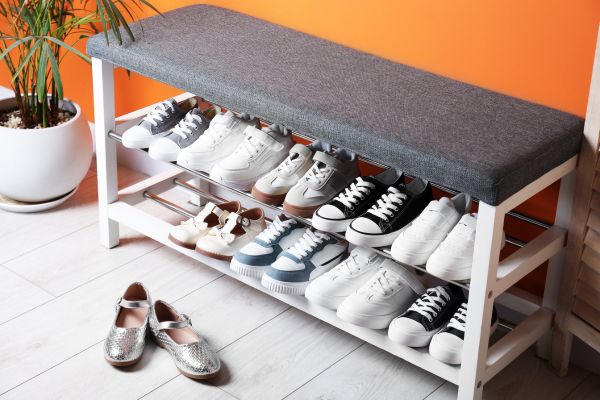
A storage bench is one of the most useful solutions. It gives you a place to sit while putting shoes on, while hidden compartments or shelves underneath keep pairs tucked away. This works especially well for families or homes with frequent guests.
Slim shoe cabinets are another excellent choice for narrow hallways. They take up minimal floor space and keep footwear concealed behind doors, creating a cleaner look.
If you prefer open storage, low shelves or baskets can keep everyday shoes easy to reach. This setup works best when limited to pairs you wear most often, so it stays tidy.
Closet Shoe Storage Ideas That Maximize Space
Closets often contain untapped storage potential. With a few adjustments, even a modest closet can hold more shoes than expected.
Stackable shelves help use vertical space efficiently. Instead of letting shoes sprawl across the floor, layered shelving turns one level into several. This is ideal for flats, sneakers, and casual pairs.
Over-the-door organizers are useful for smaller shoes and sandals. They free up floor space and make each pair visible at a glance.
If your closet has adjustable shelving, consider changing shelf heights based on your collection. Tall boots need different spacing than loafers or heels. Customizing shelf placement creates a better fit and prevents wasted gaps.
Clear shoe boxes are another favorite option. They protect shoes from dust while allowing you to see what is inside. For collectors or seasonal rotation, they are especially practical.
Under-Bed Shoe Storage Ideas for Small Rooms
When floor space is limited, the area under the bed can become valuable real estate.
Low-profile rolling bins make it easy to slide shoes in and out. These are excellent for off-season footwear, formal shoes, or pairs you wear occasionally. Choose bins with lids or zip covers to reduce dust buildup.
Soft under-bed organizers with divided compartments are lighter and easier to store. They work well for flats, sandals, and trainers.
One smart habit is storing only clean shoes under the bed. It keeps the area fresher and protects fabrics or bedding nearby.
Open Display Shoe Storage Ideas for Collectors
Some shoes deserve to be seen. If you love fashion or have built a collection over time, display storage can turn shoes into part of the décor.
Floating shelves create a boutique-like effect, especially for heels or statement designs. Placing shelves in a bedroom dressing area gives the space personality while keeping pairs accessible.
Glass-front cabinets offer a cleaner and more protected display. They keep dust away while still showing off your collection.
Color coordination can make open storage look intentional rather than chaotic. Grouping shoes by shade, style, or season creates a calmer visual rhythm.
The key with display storage is curation. Not every pair needs center stage.
Shoe Storage Ideas for Families
Households with multiple people need systems that are easy to maintain, not just attractive.
Assigning each family member a specific shelf, cubby, or basket helps prevent mix-ups. Children especially benefit from clearly labeled spaces.
Durable cubby units near the door are practical for busy homes. Everyone can quickly grab what they need, and shoes stay contained.
Rotating seasonal footwear also helps. Winter boots do not need to crowd summer sandals year-round. Packing away out-of-season pairs reduces daily mess.
Simple routines matter too. Returning shoes to their spot each evening can make a noticeable difference.
Shoe Storage Ideas for Boots and Tall Footwear
Boots often create storage challenges because of their height and shape.
Tall boots should ideally be stored upright to prevent creasing. Boot shapers, rolled magazines, or inserts can help maintain structure.
A dedicated lower closet shelf works well for ankle boots and shorter styles. For taller pairs, use a corner area or floor section with enough vertical clearance.
If space is tight, hanging boot clips can save room while keeping shafts straight. Just ensure they are clipped gently to avoid marks.
Creative Shoe Storage Ideas Using Everyday Furniture
Sometimes the best storage solution is already in your home.
A bookshelf can become a shoe rack with surprising ease. Low shelves fit sneakers, flats, and loafers neatly.
A vintage ladder can hold shoes creatively, especially in modern or rustic spaces. It adds charm while providing layered storage.
An unused sideboard or console cabinet near the entrance can store shoes behind closed doors, making the area feel tidy and refined.
Repurposing furniture often creates more character than buying single-purpose storage.
How to Keep Shoe Storage Organized Long-Term
Even the smartest system fails without maintenance. The easiest way to stay organized is to keep only what you wear and love.
Review your collection occasionally. If shoes are damaged, uncomfortable, or never worn, it may be time to let them go.
Clean shoes before storing them. Dirt and moisture shorten lifespan and make storage less pleasant.
Store frequently worn pairs where they are easiest to reach. Occasion shoes can go higher, lower, or farther back.
Most importantly, choose a system that matches your habits. If opening multiple boxes feels like too much effort, use open shelves instead. Realistic storage beats perfect storage every time.
Choosing the Right Shoe Storage for Your Lifestyle
The best Shoe Storage Ideas depend less on trends and more on how you live. Someone with a minimalist wardrobe needs something different from a sneaker enthusiast or a family of five.
Ask yourself how many pairs you wear weekly, how much visible storage you enjoy, and whether you prefer quick access or hidden organization. Those answers usually point toward the right solution.
Sometimes combining methods works best: a bench at the door, shelves in the closet, and seasonal pairs under the bed.
Conclusion
Good shoe organization is not about creating a showroom. It is about making everyday life easier and your home more comfortable. With the right Shoe Storage Ideas, clutter becomes manageable, favorite pairs stay in better condition, and mornings run more smoothly.
Whether you choose sleek cabinets, simple shelves, under-bed bins, or a creative display wall, the best system is the one you will actually use. Start with one area, keep it practical, and let the order grow from there. Often, the smallest changes under your feet create the biggest difference in your space.