
If your legs look shorter than your torso, getting dressed can sometimes feel like a puzzle. A jumper that looks balanced with one pair of jeans may overwhelm another, while a small change in the waistband or hem can make an outfit feel completely different. Learning how to dress short legs is about visual proportions, not disguising your body or following strict rules. You can wear flat shoes, relaxed trousers and oversized layers while still creating a longer-looking leg line.
Find the starting point of your leg line
Our eyes tend to read an outfit in sections. The point where a top meets trousers or a skirt often becomes the apparent starting point of the legs. Move that boundary upwards and the lower half may look longer, even though nothing about your actual proportions has changed.
Try tucking the front of a T-shirt into your trousers, then compare it with the same shirt worn loose over the hips. Look in a full-length mirror at normal standing distance rather than judging only from a close-up photograph. Neither version is wrong; the comparison simply shows how the visible waistline affects vertical proportions.
Choose trouser rises that work with your torso
Why a higher waistband often helps
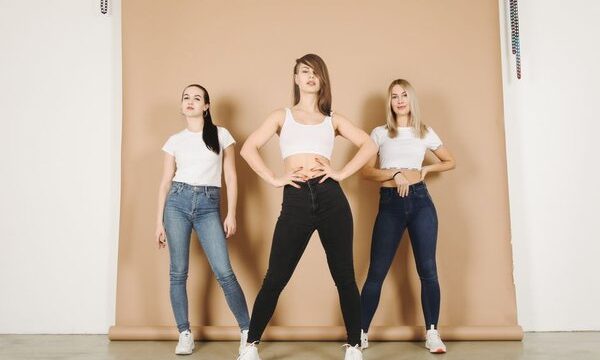
High rise styling is a useful starting point for longer looking legs because the waistband sits nearer your natural waist. Straight-leg jeans, tailored trousers and wide-leg styles can all work. A tucked or slightly cropped top makes the raised waist visible instead of covering the very feature doing the work.
However, the highest rise in the shop is not automatically the best. If the waistband digs into your ribs when you sit, bunches at the front or leaves a large gap at the back, try a different cut or a mid-rise. The aim is a comfortable waist placement and an uninterrupted shape, not a particular label on the hanger.
Pay attention to the shape below the hip
Straight-leg trousers create a relatively continuous line from hip to hem. Wide-leg trousers can do the same when the fabric falls smoothly rather than collecting around the ankles. Tapered trousers are also an option, especially with a clean, narrow opening above the shoe. Excess fabric pooling at the hem can visually shorten the lower half, although it may be exactly the relaxed look you want.
Make hem length a deliberate choice
A trouser hem that ends at the right place can be more effective than buying an entirely new outfit. Full-length trousers generally look neat when they skim the upper part of your footwear without folding into heavy stacks. With wide legs, aim for a hem that nearly meets the shoe while staying clear of the ground.
Cropped trousers need a little more thought. A hem finishing at the narrow part of your ankle often creates a cleaner break than one cutting across the widest part of the calf. This is a visual preference rather than a ban on capris or cropped jeans. Try your actual shoes on before deciding whether to shorten anything. A tailor can adjust a hem if the rest of the fit is right.
Connect trousers and shoes with colour
Colour continuity is one of the easiest approaches to short legs outfits. Black trousers with black loafers, navy tights with navy boots or dark denim with similarly toned shoes can make the eye travel downwards without a sharp interruption. You do not need an entirely monochrome wardrobe: repeating a colour near the ankle is often enough.
With bare legs, footwear that is relatively close to your skin tone may create a similar effect. There is no universal shade of nude, so choose a colour that suits your own colouring rather than a product description. Shoes with a lower-cut vamp can reveal more of the top of the foot, while ankle straps or contrasting boots introduce a visible break. Those breaks are style choices, not mistakes.
Use skirts and dresses to shift the balance
A skirt that sits at the natural waist can visually raise the beginning of the legs. Above-knee hemlines show more leg, but they are not essential. Midi skirts work beautifully when the waist is defined and the fabric drapes rather than bunches at the hips. A front or side slit can introduce movement and reveal part of the leg as you walk.
For dresses, consider where the waist seam, belt or change of colour falls. A belt placed at your natural waist often feels more balanced than one tied low across the hips. A relaxed dress works without a belt too; streamlined footwear can change the overall effect.
Try one outfit three ways before shopping
Imagine a typical UK weekend outfit: blue straight-leg jeans, a cream knit and Chelsea boots. First, leave the knit untucked and fold the jeans above the boots. Next, tuck the front of the knit and let the jeans meet the top of the boots. Finally, keep the tuck but switch to boots close in colour to the denim. These versions change the visible waist, ankle break and colour line separately, so you can see which detail matters most to you.
Take a photograph at the same distance and camera height each time. A low camera angle can make legs appear longer regardless of clothes, so consistent comparisons are more useful. You may find that a single tuck or hem adjustment gives you the balance you wanted without buying anything.
Frequently asked questions
Absolutely. Look for a comfortable waist position and a length that falls neatly over your shoes. A fitted or tucked top can define the waist, but wide legs also work with looser layers if you enjoy that silhouette.
Not necessarily. Pointed or low-vamp flats may extend the visible foot line, and flats that blend with your trousers can reduce a colour break. Comfort and practical walking support matter more than creating an illusion.
No. Matching boot and trouser colours, wearing a longer hem over the boot opening, or pairing boots with matching tights can create a continuous effect. Contrasting ankle boots work too when you want the footwear to stand out.
Only if you dislike how they fit or look on you. Low-rise jeans usually place the visible waistline lower, but a shorter top, a streamlined leg shape or similar-coloured footwear can rebalance the outfit.
Dress for the proportion you enjoy
Creating longer-looking legs rarely requires a completely different wardrobe. Begin with the waist position, check where hems land and notice whether your shoes extend or interrupt the colour line. Experiment with one change at a time. The best result is not the outfit that follows every proportion trick; it is the one that feels comfortable, looks intentional and still feels like you.