
Broad shoulders can make an outfit look striking, structured and confident. If you would prefer your upper and lower halves to feel more visually balanced, small clothing choices can help. You do not need to fit an inverted-triangle body type, hide your shoulders or follow rigid rules. Broad shoulders appear across many body shapes, so the most useful approach is to consider how the whole outfit distributes attention.
The simplest answer to how to balance broad shoulders with clothing is to add some visual presence below the waist, choose necklines that lead the eye inward or downward, and avoid unwanted bulk directly at the shoulder line. Here is how to make those ideas work with clothes you enjoy wearing.
Look at Your Overall Proportions First
Shoulder width is only one part of your silhouette. Height, bust, waist definition, hips and preferred fit all influence how a garment looks. Someone with broad shoulders and fuller hips may already have the balance another person wants. Broad shoulder styling works better as a selection of options than as a universal formula.
Try a full-length mirror photo in a simple top and trousers. Notice where your eye lands first. Change one element, perhaps the trousers, and compare. This is more revealing than deciding a garment is wrong because of your body-shape label.
Choose Necklines That Guide the Eye
Try V-Necks, Open Collars and Soft U-Shapes
Among popular necklines for broad shoulders, V-necks and open collars create lines toward the centre of the torso. A softly scooped U-neck has a similar effect. Even leaving a shirt’s top button undone can open the neck area without feeling revealing.
A wrap top is useful too: its diagonal edge creates movement across the chest, while a waist tie adds definition lower down. For more coverage, try a narrow V-neck over a camisole. If you want to compare alternatives, a guide to choosing flattering necklines is a natural next read.
Keep Wide Necklines If You Love Them
Boat necks, off-the-shoulder cuts and broad square necklines emphasize the horizontal shoulder line. That does not make them off-limits. Pair a favourite wide neckline with relaxed trousers or a softly flared skirt to distribute attention more evenly.
Pay Attention to Shoulder Seams and Sleeve Shapes
A seam that sits near your natural shoulder point often creates a clean outline. Sharply extended seams, stiff epaulettes and substantial shoulder pads may visually widen that line. This can be a deliberate fashion statement; choose it when the effect suits your mood.
Let Fabric Soften the Upper Body
Fluid jersey, softer knits and lightweight woven fabrics tend to follow the body more gently than heavily constructed materials. A slightly dropped shoulder can look relaxed, but an exaggerated drop in thick fabric may add bulk. Judge the actual outline in the mirror, not the label on the hanger.
Notice Where Sleeves Add Volume
Sleeve shapes can change shoulder balancing outfits considerably. Cap sleeves ending near the widest part of the shoulder may draw attention outward. Puffed sleeve heads add volume at the top, whereas sleeves that broaden closer to the cuff shift focus lower. Three-quarter sleeves can also bring attention toward the waist or hips when your arms rest naturally.
Create More Presence Below the Waist
Often, changing the bottoms is easier than searching endlessly for a different top. Wide-leg and relaxed straight-leg trousers give the lower silhouette more substance. A-line, pleated and gently flared skirts add movement away from the hips.
It need not be dramatic. A stiff blazer with very narrow trousers might feel top-heavy, while the same blazer with straight jeans looks more even. Pleats, textured denim or a patterned skirt can make the difference without adding excessive volume.
If you prefer fitted trousers, keep them. A longer tunic hem or shoes with a stronger visual presence can offer another balancing point. A guide to choosing trouser shapes for your proportions can help with these combinations.
Use Layers to Create Vertical Lines
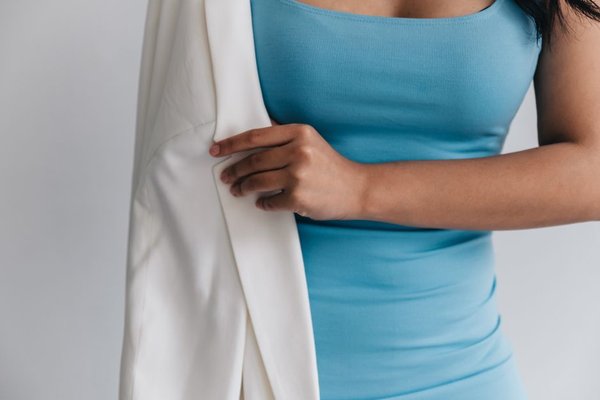
An open cardigan, unbuttoned shirt or single-breasted blazer creates vertical edges down the front of your outfit. Those lines guide attention through the torso instead of stopping at the shoulders. The layer should skim rather than pull across your upper back.
Check jacket length as well. A hem ending around the hips can add attention lower down, while a short, boxy jacket with strong padding may emphasize the top half. Try different hemlines with the same trousers before ruling out a style altogether.
Place Colour, Pattern and Accessories Thoughtfully
Bright colours, prints and strong contrasts attract attention. For a more balanced look, you might combine a quiet top with patterned trousers, a colourful skirt or textured shoes. You do not have to wear only dark colours above the waist.
Long pendants, narrow scarves and bags carried around the hip can also move focus downward. A large shoulder bag or bold detail across the collar does the opposite. Neither is a mistake; these are simply effects you can use intentionally.
Build Outfits Around Everyday Situations
A Casual Weekend Outfit
Start with a soft V-neck T-shirt, straight-leg jeans and trainers. Swap in wider jeans if you want more weight below the waist. An open shirt over the T-shirt can add another vertical line without hiding your shoulders.
A Polished Work Outfit
Pair an open-collar blouse with fluid wide-leg trousers and a lightly structured blazer. Keep the blazer open and check for pulling across the back. This combination balances tailoring with movement rather than relying on oversized clothes.
A Dressier Look
A wrap dress with a softly flared skirt combines a diagonal neckline, waist definition and lower-half volume. Prefer separates? Try a simple top tucked into a pleated midi skirt. A guide to styling skirts for different proportions offers more variations.
Frequently Asked Questions
V-neck tops, open-collar shirts, wrap styles and softly draped blouses are flexible choices. Check seam placement and fabric weight, then consider how the top works with your bottoms.
No. Sleeveless tops can look excellent on broad shoulders. Comfortable straps and properly fitted armholes usually matter more than following a rule about coverage.
Absolutely. Oversized tailoring can highlight your shoulders stylishly. To soften the effect, combine it with relaxed or wide-leg bottoms and avoid a fit that collapses awkwardly at the upper arm.
A low-contrast top may draw less attention than a bright print, but colour is not the whole story. Neckline, garment structure and trouser volume all contribute to the finished silhouette.
Make Balance Personal
Learning how to balance broad shoulders with clothing is about directing the eye, not correcting your body. Experiment with one change at a time: an open neckline, a smoother sleeve, fuller trousers or an unbuttoned layer. Keep what feels comfortable and looks like you. Your shoulders can remain a feature you celebrate, even when you want a different proportion for one outfit.